Picture
Red Tailed Hawk
All 16 of my blueberry bushes are loaded with fruit, and lately I've been worrying about how I would be able to protect them from the birds. The robins definitely got their share last year, and I don't want the boys to miss out on any berries if I can help it. I was thinking about rigging up bird netting, but then I remembered my trip to the Messina Hof winery and vineyard this summer. I remember asking the owner how he controlled birds. He paused, held up his finger, and said "Listen". After a few seconds, the scream of a hawk  erupted from a loudspeaker mounted on a nearby pole, piercing the morning calm. The hawk recording was played several times every hour, and it had been fairly effective in protecting the grapes. I figured that if it worked well enough for a commercial operation, it should work well in my yard too.

There are many products you can buy that will play predator calls, distress calls, and all manner of other things, but I'm too cheap for that stuff. The first thing I did was visit the Audubon Society and other birding websites to find recordings of hawk screams and distress calls. I found some recordings that I thought would work, and mixed them together into a five-minute long mp3, which contained the predator-alert call of the American robin, followed by the scream of the red tailed hawk, and finally by a few minutes of silence. By loading the track on an old iPhone I had lying around and setting it to repeat, the calls would play every five minutes. I'm not sure if this is too much or too little, I'll just have to watch carefully.


I got a couple of cheap computer speakers, and spliced in some stereo wire so that they had a very long lead. I then placed them in a plastic 5-gallon bucket with a hole cut out of the side (weather protection), and placed them up on top of the 1,000-gallon rain tank overlooking the blueberries. Once everything was wired together, I hit play and crossed my fingers. Success! The screech of the hawk shattered the silence. If I was a berry-eating bird and I heard that call coming from up above, I'd probably lose a feather or two. I let the track loop for almost six hours today, and I'll probably let it run for eight+ hours each day until blueberry season is over. It's not so loud that I think it will bother any of my neighbors, and I have a feeling that if it did bother anybody, some fresh-picked blueberries would probably smooth things over.

Picture
Mixing hawk and robin calls into a 5-minute mp3.
Picture
5 minute track loaded onto old iPhone.
Picture
Cheap speakers in a bucket to keep off the rain.
Picture
Speakers placed on the rain tank and connected.

Robin Predator Warning Call

Red Tailed Hawk


Picture
Indio Mandarinquats
The family and I are in Lake Jackson visiting my in-laws this weekend. I didn't bring my laptop so I can't really put a full post together this weekend. However, I did eat lots of loquats, visit the Genoa loquat mother tree, and try some Indio madarinquats. I'll be back with a full post next week.
 
 
Picture
Sumo/Dekopon Fruit
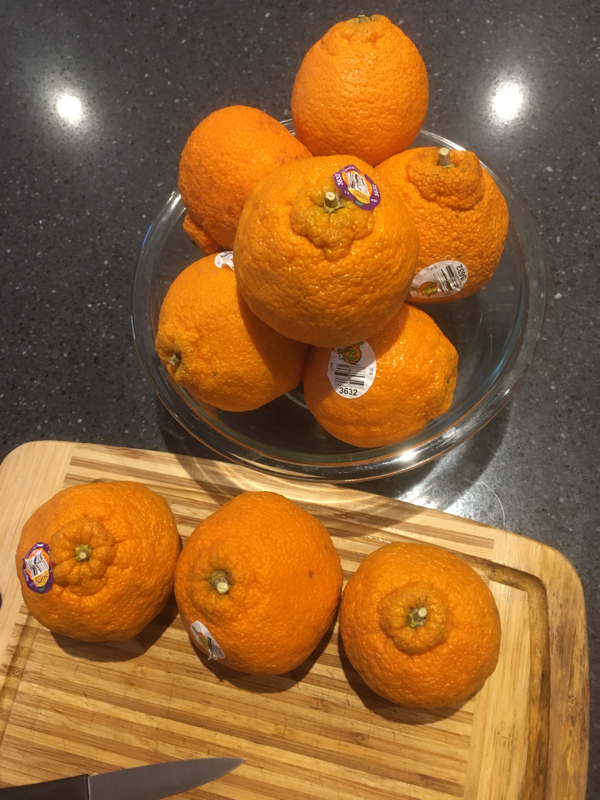
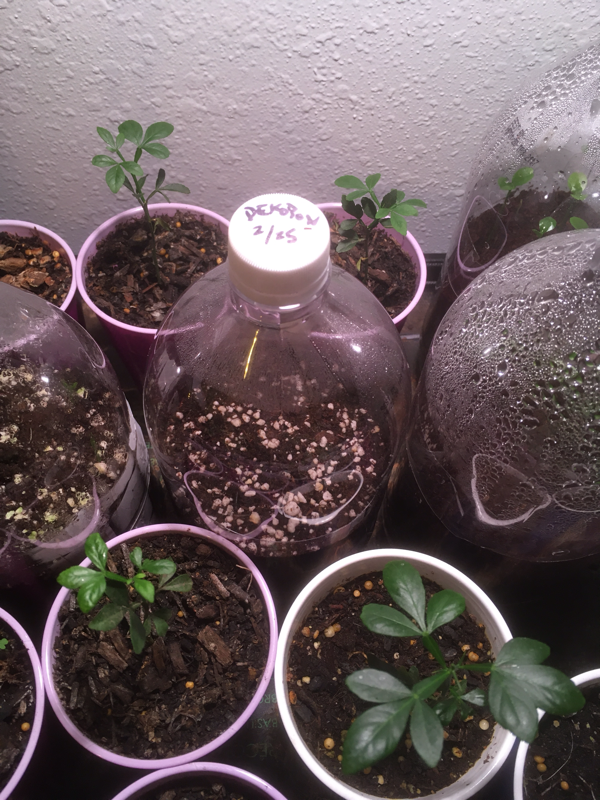
The Dekopon, marketed in the US as Sumo, is a legendary seedless hybrid between the Kiyomi tangor and a ponkan mandarin. It's unique flavor is all the rage in Japan, and famed fruit journalist David Karp regards it as one of the best citrus fruits he's ever tasted. Adding to the hype, they're really hard to find in the US, and very expensive when you do. To further complicate things, the rights to the budwood are exclusively owned by a family in California (which is under citrus quarantine anyway), so there's no way for home growers like me to buy or graft our own Dekopon trees. All we can do is buy the fruit in the stores when we can find it, and hope that we're one of the very lucky few that finds a Dekopon seed. I had never even seen one before, and just figured that the Dekopons, like the mythical Red Nules, weren't in my future.

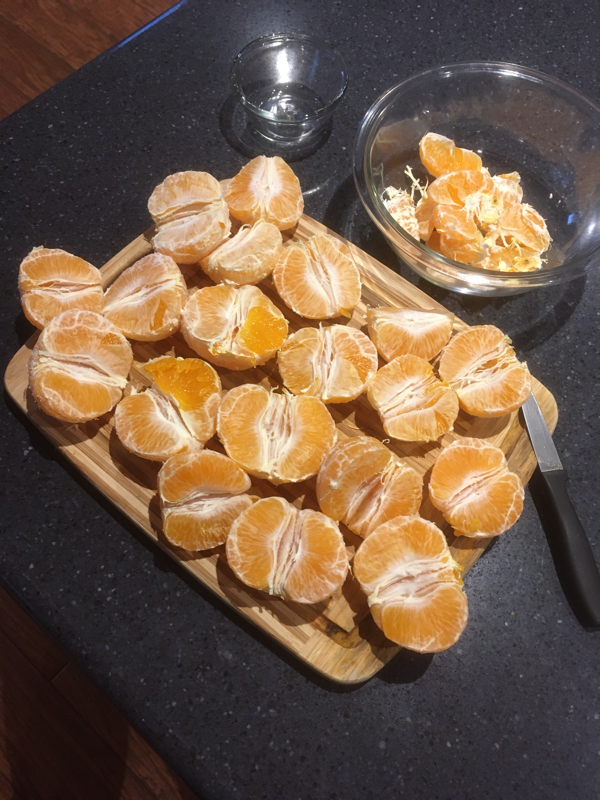
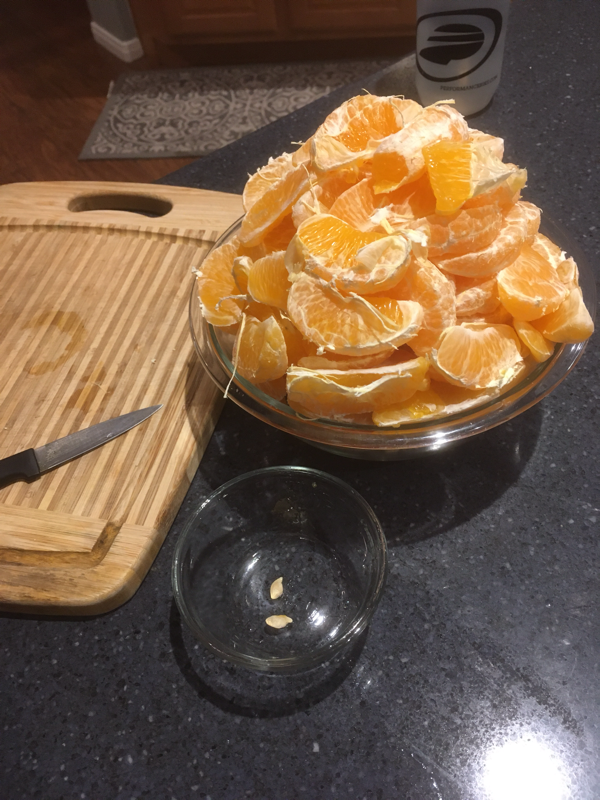
The other week when I was at my local HEB, I was amazed to find Sumos hiding in a little side display by the bananas. I don't remember how much they were, but they weren't cheap, and they looked absolutely terrible. The peels were bumpy and puffy, typical of overripe citrus, and many were clearly bruised up and battered. Still, not being able to resist, I bought 10 of them and brought them home in the hopes that I might find a seed. When citrus is called "seedless", that doesn't always mean 100% seedless, and occasionally seeds can still occur. I peeled and carefully examined the segments from all 10 of the fruits, but unfortunately didn't find any viable seeds. I found some very tiny, immature seeds, but nothing that I could plant and expect to germinate. Oh well, you win some, you lose some. The fruit is too expensive to keep trying, and even though there are many people selling Dekopon seeds on eBay, I don't trust any of them.

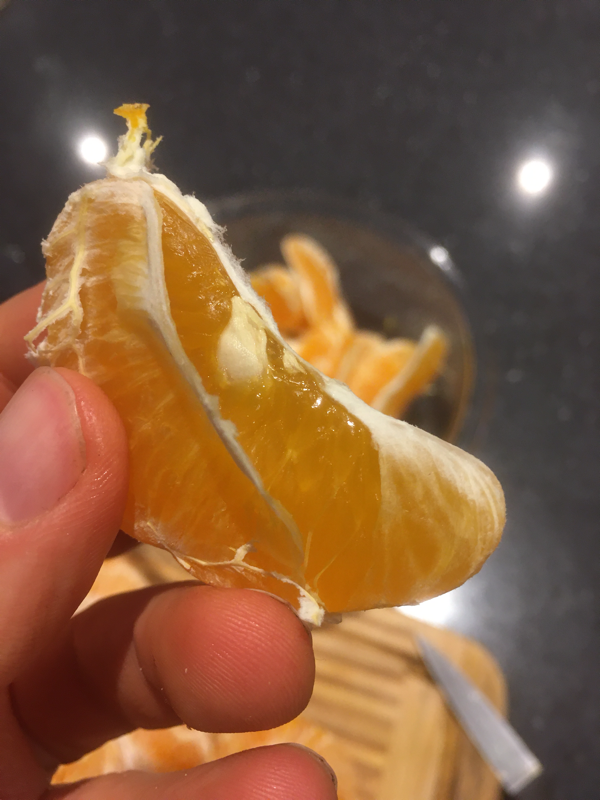
Seeds or no seeds, I really like the Dekopon. The fruits are round with a pronounced bump on one end like a Minneola tangelo, and are very easy to peel. Inside, they have a hollow core surrounded by the segments, which are in turn encased in very thin, easy to eat membranes. The flesh is very juicy and soft, again very similar to a Minneola tangelo, but slightly firmer in texture. The flavor is very sweet with just the right amount of acid to balance it, and reminds me of the citrus drink Sunny D. I have to agree with Mr. Karp, the fruit has an excellent flavor. They definitely won the approval of the boys, who gobbled up all they could get. If they're that good from HEB, just imagine how good they would be right off the tree!

Picture
10 dekopon fruits
Picture
Boy #1 taste test.
Picture
No seeds.
Picture
Tiny immature seeds.
 
 
Picture
Collecting pollen from Wekiwa tangelo flower.
Ever since John Panzarella told me the story of how he tried to breed a pink lemonade fruit by crossing a Ruby Red grapefruit and an Ujukitsu, I've wanted to try to make a controlled cross of my own. I've planted several open pollinated seeds, but until now I've never tried contolled pollination. It turns out its much more difficult than I thought. Almost all of my citrus trees are blooming right now, so I thought this weekend would be the perfect time to try it. First, I needed to select a pollen donor and a seed parent. Not all citrus produce hybrids, so my choice of potential seed parents was limited to those varieties I have that produce monoembryonic, zygotic seeds: Pummelos, Meyer Lemon, and Ujukitsu. I've never been impressed with pummelo hybrids (like Oro Blanco), and I didn't want a sour fruit, so I chose the Ujukitsu, aka the "lemonade fruit".

For the pollen donor, I could use any citrus variety that was currently in bloom. I decided to use the Wekiwa tangelo because it is very delicious, is a complex hybrid itself (grapefruit x Sampson tangelo), and under the right conditions has pink flesh. Who knows? Maybe a Wekiwa x Ujukitsu hybrid would produce the pink lemonade fruit John was trying for? Even if it didn't, they're both delicious fruits, and so I would hope a cross would also be tasty. I found a sharp pair of tweezers, a small mason jar, and got to work collecting pollen from the Wekiwa's flowers. I couldn't shake or disloge the pollen easily, so I just used the tweezers to remove the stamen and anthers and drop them in the jar. I collected the pollen from a total of four or five flowers, and then headed over to the Ujukitsu.

I picked out a nice set of the Ujukitsu's flowers to try to pollinate, removed all the nearby unopened buds, and tried to emasculate the flowers so that they wouldn't pollinate themselves. This proved to be very difficult. The stamens hold the pollen so that it faces the flower's stigma, and the surfaces of both are sticky. Every time I would try to remove the stamen with the tweezers, I would accidentally cause some Ujukitsu pollen to stick to the pistil! After the second flower I gave up. I borrowed one of Dr. Wife's paintbrushes and used it to liberally apply Wekiwa pollen to the Ujukitsu stigmas. Once I was finished, I covered the flowers with a mesh bag to prevent any further pollination by insects. Hopefully these flowers will set fruit this year, and will produce some hybrid seeds. The flowers could have been pollinated by me using the Wekiwa pollen,  or been self pollinated. I'll need to plant several seeds, let them grow for a little while, and look for any signs of a hybrid plant, such as unusual leaf shape.


Picture
Wekiwa tangelo stamen and pollen.
Picture
Paint brush covered with pollen.
Picture
Pollinating Ujukitsu flowers.
Picture
Bagged to keep out other pollinating insects.
Picture
Mystery citrus seedling growing under the play fort.
 
 
Picture
Bug damaged strawberry
Roly Polys make me so mad. You pick a plump delicious looking strawberry, and the darn little crustaceans have hollowed it out from underneath! I decided to fix their little wagons with diatomaceous earth like I did last year. I gave the strawberry beds a liberal dusting, and the boys kept saying I was "making it snow". So far it has been fairly effective, but I have to wonder how much being dusted with white powder effects the plants? So far, it doesn't seem to have slowed them down at all, and it looks like we're going to have another very productive year.

On another note, my Genoa Loquat seedling is going to fruit this year. Unfortunately, it doesn't seem to have the giant-sized fruits of John Panzarella's tree, but strangely it does appear to be very late. All of the neighborhood loquat trees flowered and set fruit weeks before mine did. I've been picking and eating loquats from other trees, and mine are still green and immature. I haven't decided if this is a good thing or not yet. I guess if the fruit is later it can better avoid late freezes, but that could also mean that the flowers are more likely to be killed by cold. Regardless, mine has grown into a really beautiful tree, and I'm very happy to finally get to sample some fruit. They may not be big, but I bet they'll taste great!

Finally, after 2 1/2 years and around 182 blog posts, I've just about run our of things to say (at least until I get some more fruit). I think I'm going to give weekly blogging a rest for a little while, and put up new posts as I learn new things or new fruits become available.

Picture
Strawberry bed dusted with diatomaceous earth.
Picture
Genoa loquat seedling fruit ripening slowly.
Picture
Before the hottest longest 5k I've ever run.
 
 
Picture
Mom, Boy #1, and I
Sorry, no fruit blog post this week. The whole family trekked up to Dallas to visit, and so my mom and I could attend the 2013 Lone Star Ukulele Festival. The festival wasn't that great, but that didn't stop us from having a great time. We played lots of music, ate too much of Pappy's smoked barbeque, and slept too little. We loved getting to see our nieces, and can't wait to do it again.

Picture
Learning 'Temperance Reel'
Picture
50 on guitar, Pappy on mandolin, and me on the uke
Picture
Boy #2 is a natural!
 
 
Picture
Peach blossoms
This has got to be my least favorite time of year, unless of course we have a bitterly cold winter. All the citrus is gone except for a few kumquats, and if it weren't for the loquats and a few early strawberries, we wouldn't have any fruit at all right now. I had planned to spend the weekend grafting, planting, and re-potting, but it was just too cold. Last night it almost froze, which really had me worried considering how many delicate blooms and young fruit are on the trees right now. A late freeze now could wipe out a substantial chunk of the coming year's harvest, cause grafts to fail, and kill all my tomato and pepper plants. I just can't rest easy until we're well into March, and the nighttime low temperatures are consistently in the low to mid 50's. That's also when the strawberries will really start producing, and berry season will officially begin!

Since I felt it was too cold to graft this weekend, and I didn't really have much fruit to photograph and share, I thought I would share some pictures of the flowers on my fruit trees. They really are quite beautiful, and I love how the yard becomes a magnet for bees when the trees are in bloom. Some of the blueberries and apples have already set fruit. The Nam Doc Mail mango has put out three large flower spikes, and I would be very happy to see a fruit or two set on it! The miracle fruit is once again covered in blooms, but it hasn't set very many berries. That may be because I've had to leave the greenhouse doors shut most of the time, potentially keeping the pollinating insects out. Hopefully this is the last little bit of cold for the winter, and I'll be able to set out my pineapples and papayas soon.

Picture
Apple blossoms
Picture
Strawberry blossoms
Picture
Blueberry blossoms
Picture
Pear blossoms
Picture
Avocado blossoms
Picture
Mango flower spike
Picture
Lime blossoms
Picture
Mulberry blossoms
 
 
Picture
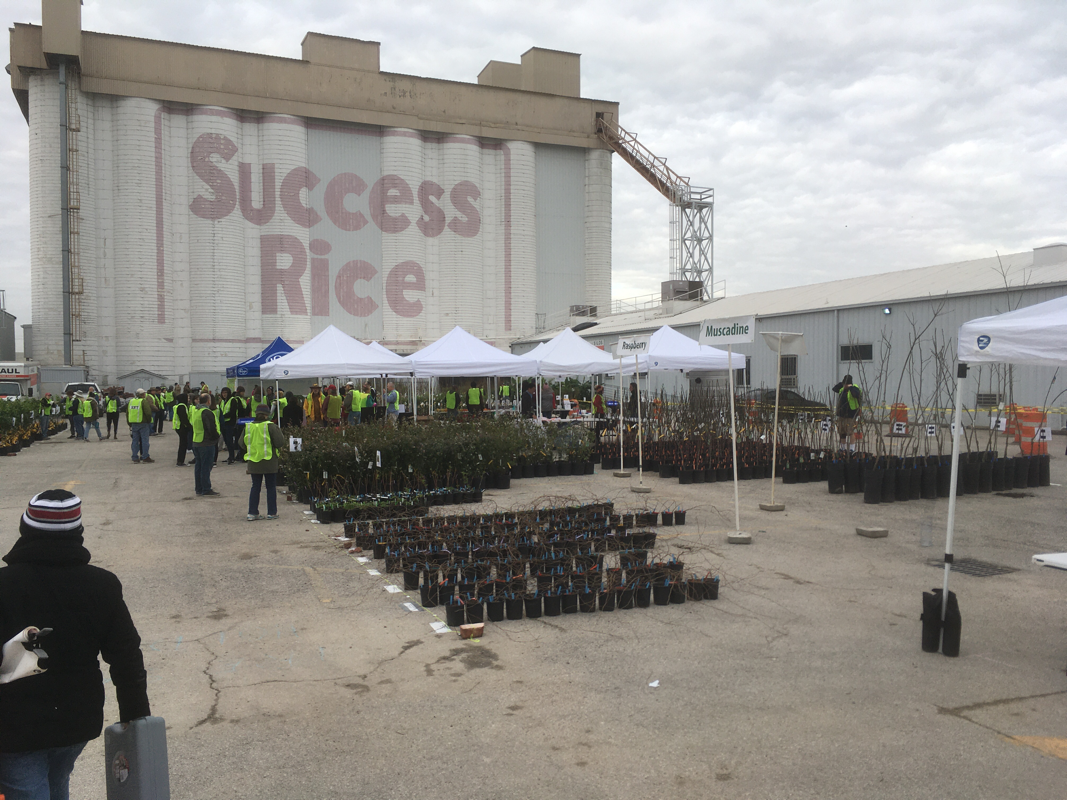
Caldwell Nursery in Rosenburg, Texas
This weekend I left poor Dr. Wife with the kids, and headed out to attend the annual Texas Rare Fruit Growers scion exchange at Caldwell Nursery in Rosenburg, Texas. We are very thankful to Kay Dee for letting us use their facilities again this years, and especially for extending a 10% discount to TXRFG members during the event. There was a pretty good variety of cuttings and scions from local growers, scions sent by chapters of the California Rare Fruit Growers, and many rooted cuttings and rootstocks. I didn't contribute very much this year, just some apple and pear scions, and some miracle fruit seedlings. Terry Matherne brought a seemingly endless supply of his seedling Golden grapefruit and other fruit, and Scott Johnsgard sent hundreds of fig cuttings, seeds, and seedlings trees.

We had a pretty good turnout, and as always, I had a great time hanging out with everyone. I was having such a good time that I forgot that I should have been taking pictures. I didn't bring nearly as many cuttings home this year because until my trees get bigger, I just don't have many more branches I can graft onto! I was lucky enough to snag some Mae and Ambrosia pomegranate wood, which I will add to the Kashmir Blend tree, and some Haichya persimmon wood that I will add to my Hana Fuyu. I also got two of each kind of fig variety that was available. I'll get them all started, and I'm thinking of using them to add a row of fig trees to the squat orchard.


On a separate note, we got our first strawberries this week! The few strawberry plants that survived the summer have really taken off, and have started producing already. The boys were just thrilled. The new strawberry plants are starting to grow more vigorously, and I think that we'll be flush with berries once the weather warms up a little bit more. All the blueberries are in bloom, the neighborhood loquats are coming along well (some are even ripe right now), the apple trees are in bloom, and almost all the citrus trees are starting to push new growth. Spring is so close I can feel its warmth. We just need to get through this next week or so with lows in the high 30's, and no late freezes (fingers crossed).
Picture
Tons of fig cuttings courtesy of Scott Johnsgard.
Picture
Late in the exchange when I remembered I was supposed to be taking pictures.
Picture
Boy #2 enjoying some of Terry Matherne's navel oranges.
Picture
First strawberries of the year!
 
 
Picture
Dr. Natelson preparing an approach graft.
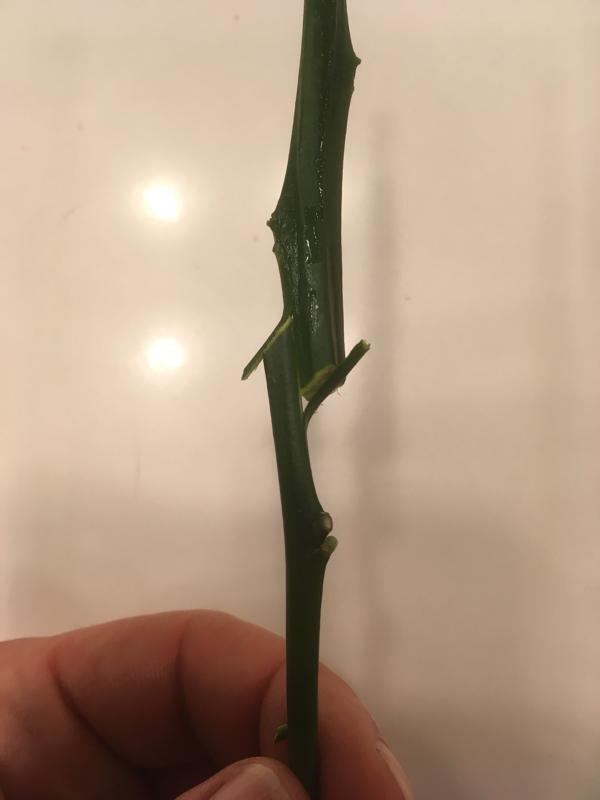
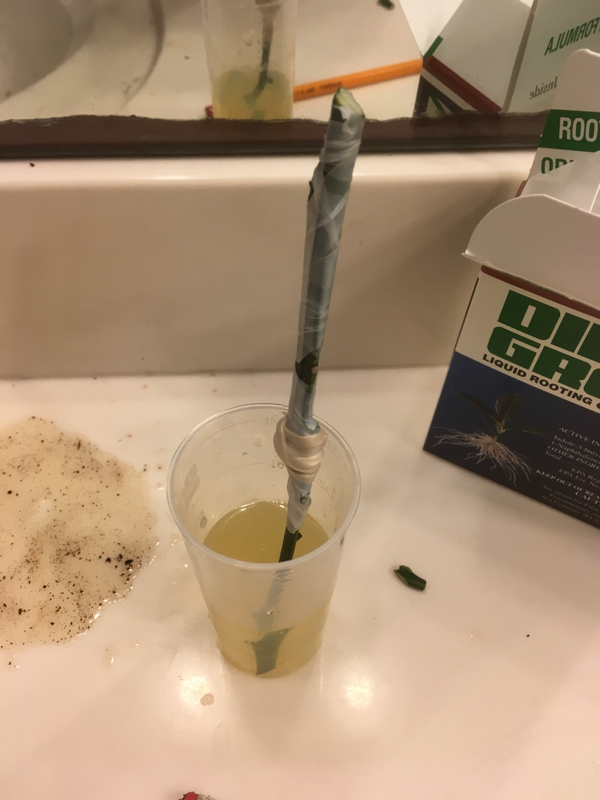
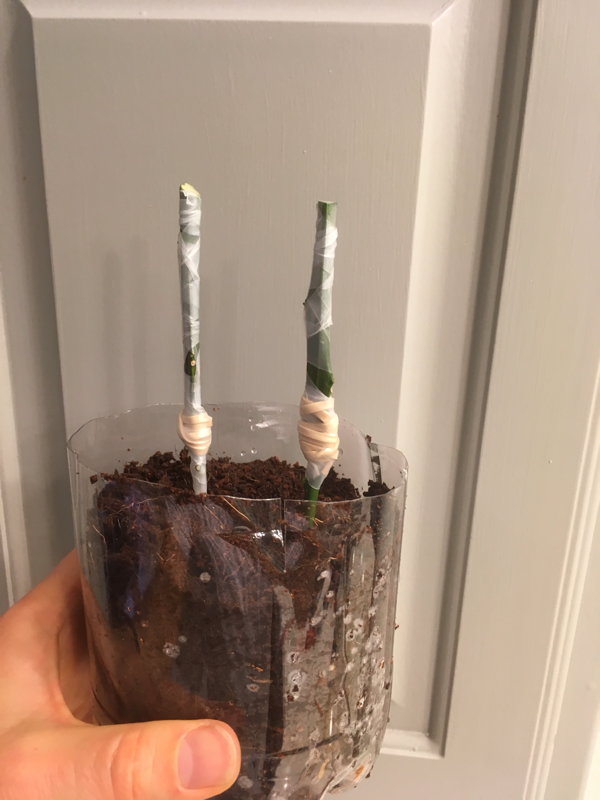
While most people probably spend last Thursday night with their special Valentine, I drove out to the Bear Creek Extension Office to attend the Gulf Coast Fruit Study Group grafting program. I had been asked to assist Dr. Natelson and George McAfee, but I don't know why. Those two master grafters had everything under control all by themselves. Dr. Natelson began by giving a great introduction to grafting and the benefits of learning to graft, such as being able to grow several varieties of fruit on a single tree, or being able to top-work a bad tree into a better variety. Then George McAfee gave a detailed presentation of his grafting toolkit, discussed how to select good budwood, and demonstrated how to cleft graft citrus. I learned that cheap electrical tape can be used instead of parafilm, and that razor blades can be handy for making clean final cuts on a scion.

Overall, the program was not at all like what I expected. The only other grafting program I've ever been to is John Panzarella's annual grafting class in Lake Jackson, where a few grafting techniques are demonstrated, and then everyone gets to try to do it themselves to gain some hands on experience. I guess I just assumed that this would be very similar, which is why I hauled so many rootstocks down there. Of course, I had to leave before the program ended, so people may have had the chance to try their hands at grafting after all. I would have liked to have stayed until the end, but the presentations were still going strong at 8:45 pm. Dr. Wife was home alone with some really cranky kids, I had work the next morning, and it looked like the program might go on to 10 o'clock or later, so I had to call it a night. I feel bad that I had to leave when I did because I hated to leave a bunch of plants for someone else to have to deal with, and I had told one gentleman that I would help him graft his rootstock to a Cara Cara. I really hope that Dr. Natelson or George were able to to it for him, and that everyone that wanted some rootstocks to practice on was able to take some home.

Picture
The masters explaining the tools of the trade.
Picture
George McAfee demonstrating how to cut a scion.
Picture
George McAfee demonstrating a cleft graft.
Picture
Rootstocks I brought to share. Hope they all found homes!
 
 
Picture
Poncho avocado in 30-gallon pot.
Dr. Wife and I have a treaty which states that I can plant whatever I want so long as I don't take up any more yard space than I already have. So back in March 2011 when I came home from Plants for All Seasons with two avocado trees, I wasn't sure where I would put them at first. Since I didn't have any more yard space, I decided to plant my new avocado trees in big 30-gallon pots up against our big pine treesI would have liked to plant them in the ground here, but the big roots of the pines made it very difficult to dig, and the drainage in that area is relatively poor. I had tried growing Mexicola Grande, Lila, and Fuerte in that general area, and they all died from poor drainage, freezes, sunburn, or a combination of the three. Planting in big pots would ensure good drainage, the pines would help shade the avocados, and I could stay on good terms with Dr. Wife.

On field trips to John Panzarella's and at Devine Avocados, I had seen avocado and citrus trees that had escaped their pots, and taken root in the surrounding native soil. Hoping my trees might do the same, I sneakily cut some holes in the bottoms of the pots when I planted the trees, and buried the pots an inch or two into the ground. Well, It's been almost two years since I planted those trees (Brazos Belle and Poncho), and in that time they've grown like crazy. They really took off when I hooked them up to the automatic drip system in my greenhouse, and they started to get smaller applications of water every day instead of deep waterings once or twice a week. I knew that at this rate they would soon outgrow their 30-gallon pots, and that if I wanted their roots to escape to the freedom of the native soil, I would have to help break them out.

First, Boy #1 and I took a little side trip to a place I know with lots of good sandy topsoil, and dug and dug until we had 12 5-gallon buckets full of dirt. We hauled it all home and lugged it to the back yard. I pulled back all the mulch and pine needles from around the pots, and did my best to rough up the soil around them. Then using a sharp utility knife, I cut square holes approximately 3-inches by 3-inches all the way around the bottom of the pots. Healthy bright-white roots were clearly visible encircling the pots, and I did my best not to slice them as I cut the plastic. I also tried to loosen up the soil and gently tease out the roots out of the holes using a garden hose and my fingers.

Once the holes were cut, Boy #1 and I began banking the sandy topsoil around the pots; six buckets of soil for each tree. As we worked, we mixed the topsoil with MicroLife 6-2-4, composted kitchen scraps, and a little humate to help encourage the avocado roots to escape. The 30 gallons of topsoil we placed around each tree resulted in a nice donut-shaped raised bed around each pot, approximately 6-inches deep and a foot or so wide. Finally, we covered the topsoil with several inches of leaves and pine needles, and watered it down. Hopefully, as fertilizer and water from the drip system drain out of the new holes and into the banked topsoil, the roots will follow and eventually take hold in the native soil.


Picture
Boy #1 helping me dig up 12 5-gallon buckets of sandy topsoil.
Picture
30-gallon pot set a couple inches into the ground.
Picture
Holes cut along the bottom of the pot.
Picture
Roots ready to make a break for it!
Picture
Sandy topsoil banked around pot.
Picture
Boy #1 throwing down some MicroLife 6-24
 

The Bell House - Growing Fruit Trees in Northwest Houston